

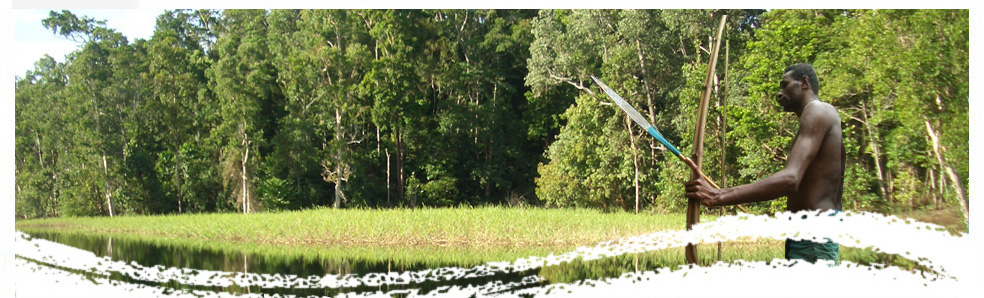

Indigenous peoples
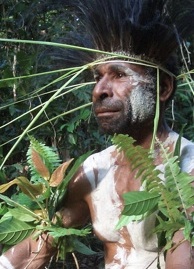
Forests supports hundreds of indigenous cultures and creatures found nowhere else in the world. They ensure the survival of 1.2 billion people;
Hidden treasures: The forests provide food, fiber, medicines.
World forests are home to tribal people who rely on their surrounding for food, shelter, and medicines. Today very few forest people live in traditional ways; most have been displaced by outside settlers or have been forced to give up their lifestyles by governments.
Of the remaining forest people, the Amazon supports the largest populations, though these people too, have been impacted by the modern world. While they still use on the forest for traditional hunting and gathering, most Amerindians, as these people are called, grow crops (like bananas, manioc, and rice), use western goods (like metal pots, pans, and utensils), and make regular trips to towns and cities to bring foods and wares to market. Still these forest people can teach us a lot about the rainforest. Their knowledge of medicinal plants used for treating illness is unmatched and they have a great understanding of the ecology of the Amazon rainforest.
In Africa there are native forest dwellers sometimes known as pygmies. The tallest of these people, also known as the Mbuti, rarely exceed 5 feet in height. Their small size enables them to move about the forest more efficiently than taller people.
In Papua New Guinea unique and isolated communities, with over 800 language groups just in Papua New Guinea alone, have lived for generations alongside some of the world's greatest biodiversity.
- Details
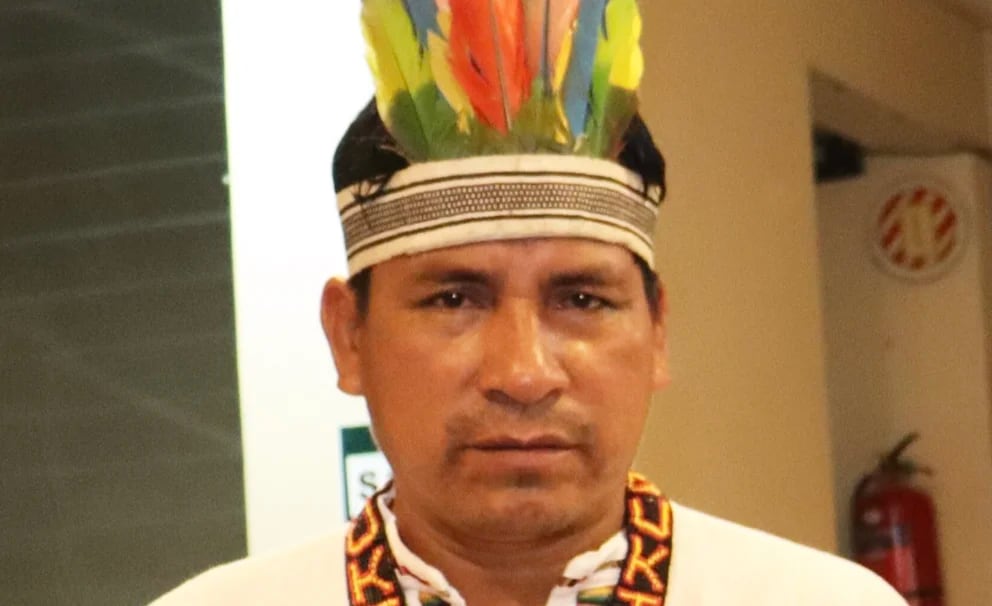 Quinto Inuma Alvarado, Kichwa tribal leader has been shot to death in an area of the Peruvian rainforest that's seen high tensions between Indigenous people and illegal loggers. He was attacked as he was returning from presenting at a workshop for women environmental leaders in the San Martín region of the Amazon on Wednesday. Peruvian police confirmed his death.
- Details
 The Yanomami’s Hutukara Association has declared a humanitarian crisis in the wake of the reported rape and killing of a 12-year-old Yanomami girl by miners, the disappearance of a 3-year-old child, and attacks on the Yanomami’s Aracaçá village that have placed the Amazonian community “on the verge of disappearance” because of violence caused by miners.
- Details
 Togu Simorangkir lives in North Sumatra. A postgraduate from Oxford University, he is an author and environmental activist. Over the past weeks, he marched for 42 days, walking with friends across Sumatra for approximately 1500 km, and reaching Jakarta a few days ago.
- Details
 Huber Samir Camayo Fajardo died young, at 23 years old. He was just in the wrong place, was with his father in the field in the municipality of Cajibío, in the Columbian Cauca, when the Mobile Riot Squad, shot at him and disappeared. The killing by of Huber Samir Camayo Fajardo was announced by the Jaime Garzón Human Rights Network.
- Details
 Antonio Treuquil was a werkén, the traditional Mapuche spokesperson, in the We Newén community. Mapuche indigenous people are in a longstanding conflict with the forest industry that grabbed most of their land during the dictatorship. Also the We Newén community is involved in a land dispute over traditional territories, with the pulp and paper company Arauco.